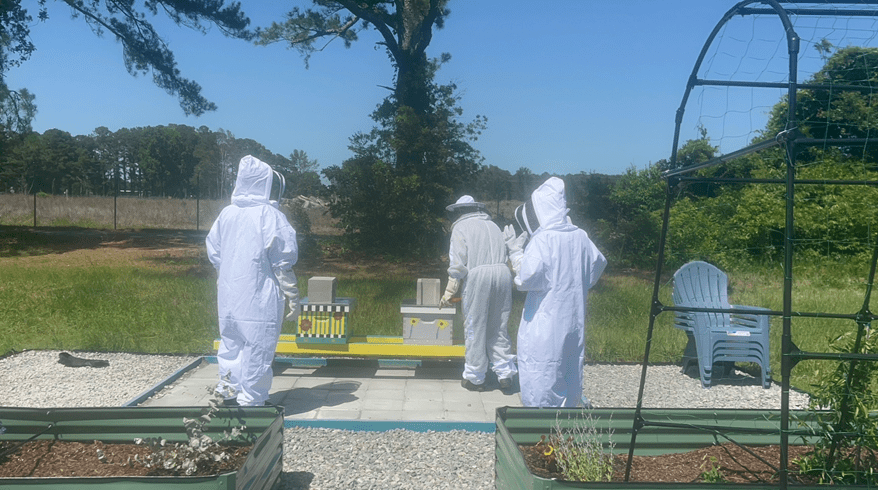
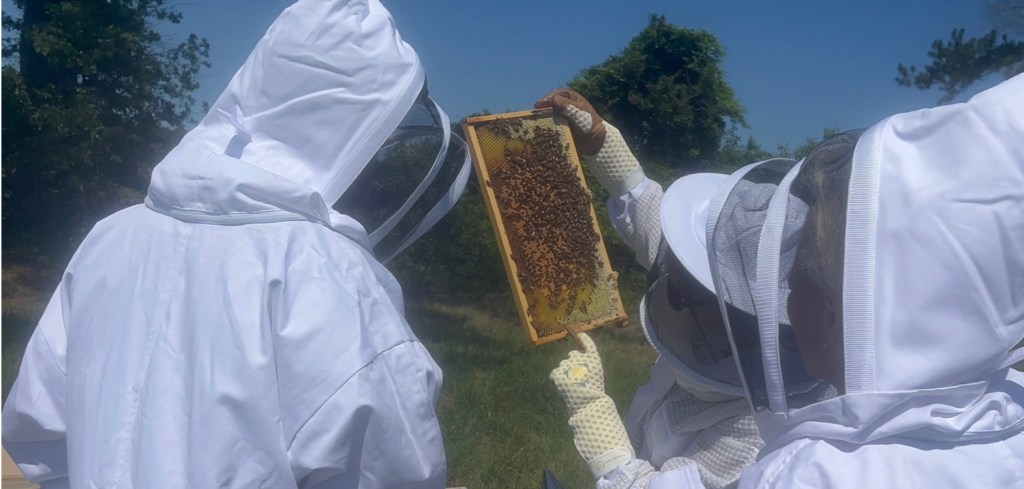
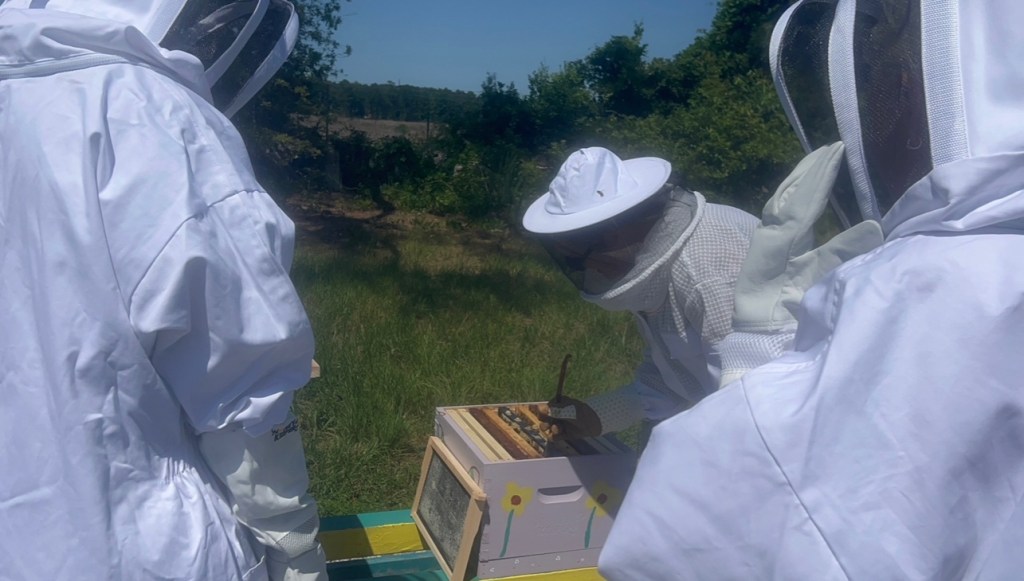
We have two hives in our apiary with a plan to add more when the group grows.
🐝 Welcome to the World of Honey Bees!
Honey bees are some of the hardest-working creatures on our planet, and they play a vital role in keeping our environment healthy. In fact, scientists often say that we can thank bees for one out of every three bites of food we eat!
| Topic | How It Works |
|---|---|
| The Pollination Process | While collecting pollen to feed their growing babies, bees accidentally catch pollen on their hairy legs. As they buzz from flower to flower, they transfer this pollen from male to female flower parts. This fertilizes the flowers, allowing them to grow seeds, fruits, and vegetables. |
| Why Farmers Love Them | While there are many kinds of pollinators (like birds and butterflies), farmers especially love honey bees because their hives can be easily moved to different orchards and fields whenever crops need pollinating. |
| A System in Danger | You may have heard that honey bees are disappearing. Because we rely on them so heavily for our food, protecting bee populations is incredibly important to our survival. |
🕺 Bee Talk: The Language of Dance
Bees don’t talk the way humans do, but they have developed an incredibly clever way to share information with one another: they dance!
| Method | What It Means |
|---|---|
| The Waggle Dance | When a worker bee finds an amazing patch of flowers, she returns to the dark hive and performs a “waggle dance.” The angles and wiggles of her dance act like a map, showing her hive mates exactly which direction to fly and how far to go. |
| Watch It! | https://youtu.be/1MX2WN-7Xzc?si=JSYP1nuiYvc9Rewd |
🔍 Are All Bees the Same?
There is a huge, diverse world of bees beyond the common honey bee. Scientists have discovered and named thousands of different species, each with unique behaviors and habits.

